Walk into any guitar shop and the electric guitars fall into a few obvious families. Some are slabs of wood with no openings at all. Some look like a slimmed-down acoustic, with f-shaped soundholes in the top. Others sit in between, slim like a solid body but with f-holes, or solid-looking with hidden cavities inside. These differences are not just cosmetic: the way a body is built affects how the guitar handles volume, how much it weighs, how it sounds unplugged and how long its notes ring.
This article explains the four main body styles (solid, chambered, semi-hollow and hollow), where they came from, and what to consider when choosing between them. It describes construction in general terms; individual models vary a lot, so treat everything here as a starting point for trying guitars, not a rule.
The four body styles at a glance
| Style | Construction | Unplugged volume | Resistance to feedback | Typical weight |
|---|---|---|---|---|
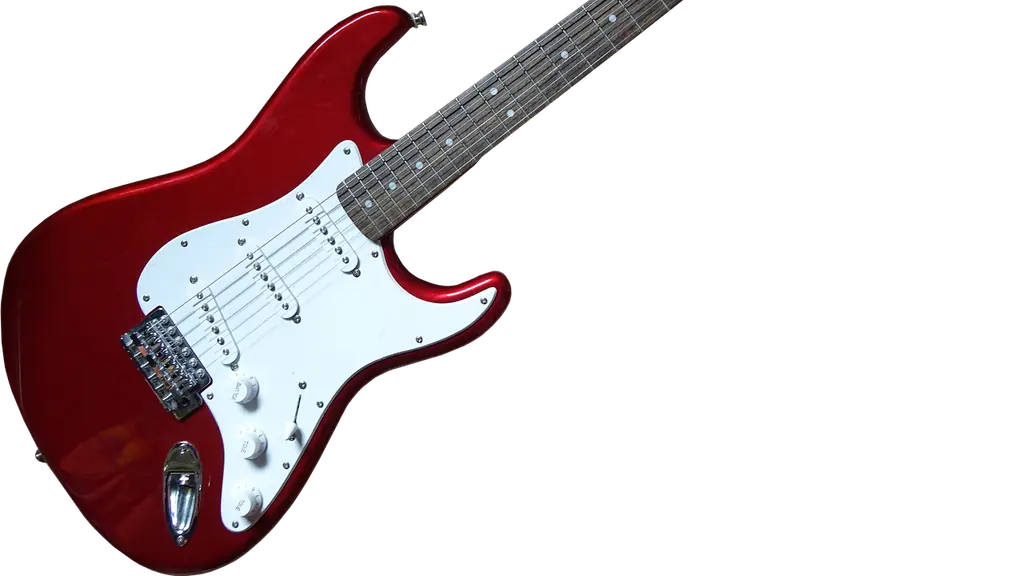
| Solid body | Solid wood, routed only for pickups and electronics | Quiet | High | Moderate to heavy |
| Chambered or weight-relieved | Solid-looking body with hidden cavities | Quiet to slightly louder | High to fairly high | Lighter than an equivalent solid body |
| Semi-hollow | Thin hollow body with a solid center block, usually with f-holes | Moderate | Moderate to good | Moderate |
| Hollow body | Fully hollow, often a deep archtop with f-holes | Loudest | Lowest | Often light for its size |
The "feedback" column is the one that matters most to many players, so it gets its own section below.
A short history: from hollow to solid and back to the middle
The first popular electric guitars were hollow acoustic archtops with a pickup added. They worked, but at higher volumes the hollow body tended to howl with feedback.
Inventors and guitar makers experimented with solid bodies to solve this. The Lemelson-MIT Program's biography of Les Paul describes how, unsatisfied with amplified hollow-body guitars, he built an early prototype he called "the Log" from a 4-by-4-inch piece of wood and an Epiphone guitar neck, believing a solid design would reduce feedback and improve sustain. Gibson initially turned down his proposals, but after competition from Leo Fender's solid-body guitars, it launched the Les Paul Model in 1952.
Solid bodies solved feedback but lost some of the warmth and unplugged resonance players liked in hollow guitars. Gibson's ES-335, introduced in 1958, is the best-known attempt at a middle ground: a thin body with hollow wings and a solid maple block running down the center. That "semi-hollow" idea has been widely used by many makers since.
Solid-body guitars
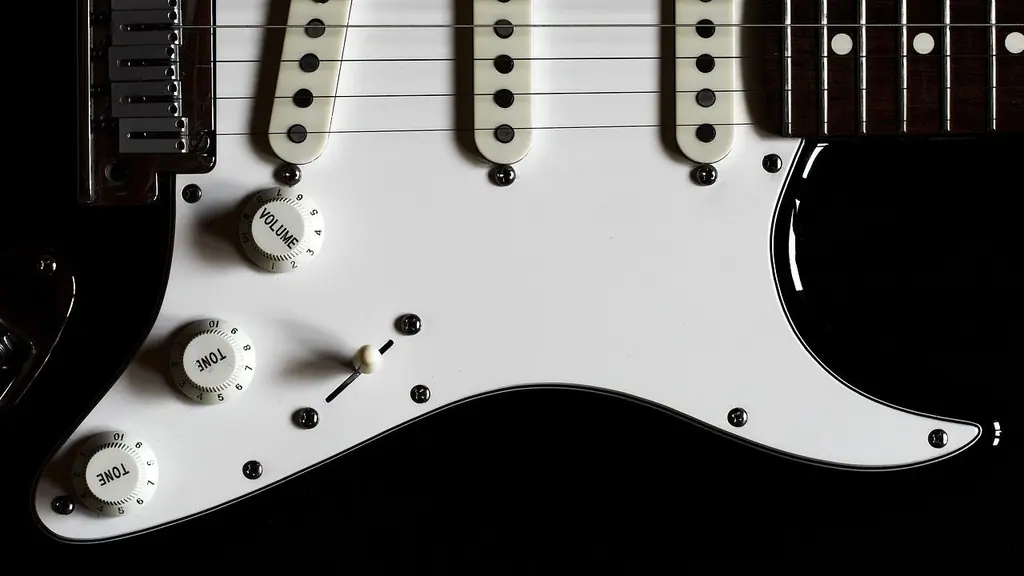
A solid-body electric is a slab of wood (sometimes several pieces glued together, sometimes with a separate top) with cavities routed only for the pickups, controls and, on some designs, a tremolo system.
Strengths:
- Feedback resistance. With little acoustic resonance, a solid body can be played at high volume and high gain with much less risk of uncontrolled howling. Yamaha's guide notes that solid bodies still feed back if you turn up far enough, but the feedback is easier to control and can even be used musically.
- Sustain. Yamaha explains that solid bodies tend to sustain longer than hollow bodies, with the amount depending on the woods and pickups.
- Freedom of shape. Because the body does not need to resonate acoustically, makers can cut it into almost any outline.
Trade-offs: quiet unplugged, which is fine for late-night practice but less satisfying when you just want to strum on the sofa, and potentially heavy, depending on the wood.
Chambered and weight-relieved bodies
From the outside these look like solid bodies, but some wood has been removed inside. In a Premier Guitar column on body weight, luthier and designer Jol Dantzig explains that Gibson had been using weight-relieving holes inside its Les Paul bodies since about 1983, initially to deal with very dense mahogany, and that "chambering" has become a catch-all term for guitars with some of their internals scooped out. He also notes that some instruments long marketed as semi-hollow are, in construction terms, chambered solid bodies.
Weight relief usually means a modest number of holes or small cavities, mainly to save weight. Chambering usually removes more wood, often in larger shaped cavities. Claims about how much either changes the tone are debated; comfort over a long set is the clearest benefit.
Semi-hollow guitars
A semi-hollow guitar has a thin hollow body, usually with f-holes, but with a solid block of wood running from the neck to the tail under the bridge and pickups. Yamaha describes the center block as a way to make the body behave less like a resonating chamber, helping to keep feedback at bay while preserving some of the hollow-body character.
What the center block does:
- Reduces feedback. Less of the top can vibrate freely in response to the amplifier.
- Anchors the hardware. The bridge and tailpiece sit on solid wood rather than on a thin, flexible top.
- Keeps some hollow character. The hollow wings add some resonance and a little unplugged volume.
Semi-hollow guitars are used across blues, jazz, rock, pop and indie music. They are a common choice for players who want some acoustic warmth without the feedback problems of a full hollow body.
Hollow-body guitars
Full hollow-body electrics descend directly from acoustic archtops. They typically have an arched top, f-holes and, on many models, a deep body. Some have a floating bridge held in place by string pressure, and some a trapeze tailpiece.
Yamaha lists the main characteristics: hollow bodies usually weigh considerably less than solid bodies, are easier to hear when played unplugged, deliver a warm tone because the body's resonance emphasizes low-mid and bass frequencies, and generally do not sustain as long. Their main drawback has always been feedback at high volume.
Hollow bodies remain closely associated with jazz, where clean tones at moderate volume suit them well. Our guide to jazz guitar for beginners covers the comping style many hollow-body players use. But no style is off-limits: rockers have used hollow bodies and jazz players have used solid bodies for decades.
Feedback: what is actually happening
Feedback is a loop. Sound from the amplifier reaches the guitar, makes the body and strings vibrate, the pickups turn that vibration into signal, the amplifier makes it louder, and the cycle repeats until one frequency runs away into a howl or squeal.
A hollow body is more prone to this because its top is designed to vibrate in response to sound, and those vibrations reach the pickups. A center block stiffens the area under the pickups and reduces how much the top can move. A solid body barely responds acoustically at all, so the loop is much harder to start.
Practical ways to manage feedback on any guitar:
- Turn down the amp or the gain. Hollow bodies usually prefer cleaner, lower-gain settings.
- Change your position. Feedback is strongest when you face the speaker at close range. Turning slightly away or stepping back can stop it.
- Use the guitar's volume knob between phrases.
- Mute strings you are not playing.
For how gain settings interact with feedback, see our explainer on fuzz, overdrive and distortion, and for volume and amp size, our guide to choosing a guitar amp.
How to choose a body style
Rather than choosing by genre, Yamaha's advice is to decide on sound, feel and look, and that matches the practical questions below.
- How loud and how distorted will you play? High gain at band volume favors solid or chambered bodies. Clean to moderately driven tones at moderate volume suit any style.
- How much does weight matter? If you stand for long periods, try chambered, weight-relieved, semi-hollow or hollow guitars and check the balance on a strap.
- Do you play unplugged a lot? Semi-hollow and hollow guitars are more satisfying to practice on without an amp.
- How does it fit your body? Deep hollow bodies can feel large when seated, especially for smaller players. Our article on acoustic guitar body shapes explains how depth and size affect comfort, and the same logic applies here.
- What about the pickups? Pickup type often affects the sound more than body style. See electric guitar pickups explained.
Try this: when testing guitars, play the same short phrase on a solid body, a semi-hollow and a hollow body, first unplugged, then through the same amp at the same clean setting, then with moderate gain. Note the unplugged volume, how long a held note rings, and at what point each one starts to feed back.
Care differences worth knowing
Semi-hollow and hollow bodies share some needs with acoustic guitars. Their thin tops are more vulnerable to knocks and, like other wooden instruments, they can be affected by big swings in humidity and temperature; our maintenance guide covers safe storage. On archtops with a floating bridge, the bridge position sets the intonation, so take care not to knock it out of place when changing strings, and ask a technician to set it if it moves.
Whatever you choose, the broader decisions about neck shape, scale length and hardware are covered in our pillar guide to choosing an electric guitar, and you can find more in the electric guitar section.
Sources
- Choosing the Right Electric Guitar: Hollow-Body vs. Solid-Body, Yamaha Music Hub
- Les Paul, Lemelson-MIT Program, Massachusetts Institute of Technology
- Weighing In on Body Density, Premier Guitar
- Gibson ES-335, Wikipedia