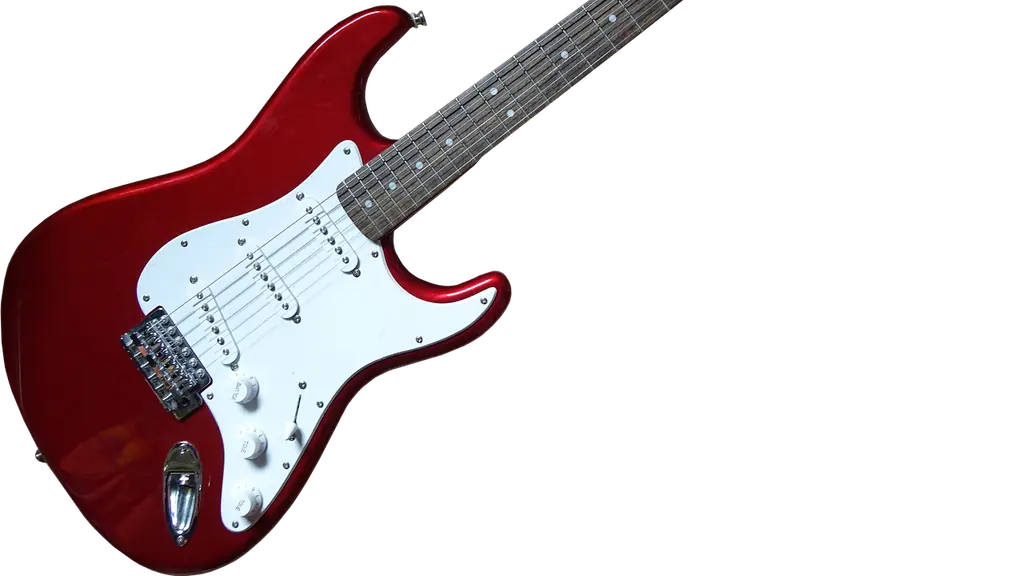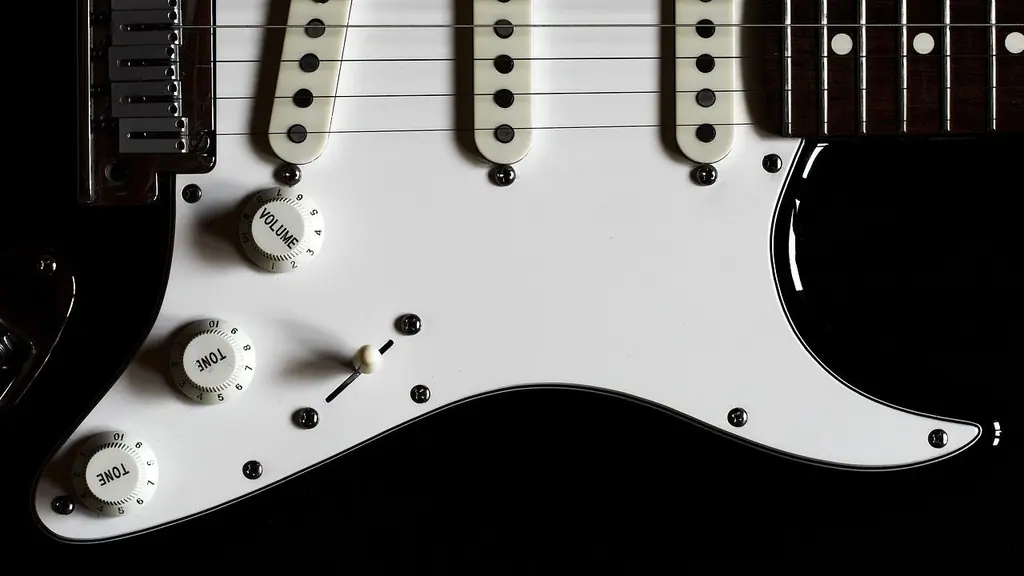
The pickups are the part of an electric guitar that turns vibrating strings into a signal an amplifier can use. They shape the guitar's voice more than any other component, yet they are often treated as a mystery: a list of letters in a specification (SSS, HH, HSS), a switch with three or five positions, and knobs that many players leave turned all the way up.
This guide explains what is going on, without needing any electronics background. You will learn how a magnetic pickup works, why single-coil pickups hum and how humbuckers stop it, where P-90s fit in, what each switch position selects, what the volume and tone knobs really do, and how active pickups differ from passive ones. Along the way are a few listening exercises you can do on your own guitar.
How a magnetic pickup works
A typical pickup is a magnet, or a set of small magnetic pole pieces, one under each string, wrapped in thousands of turns of very fine wire. Yamaha's instrument guide describes it as enameled wire; pickup wire is typically well under a tenth of a millimeter thick.
HyperPhysics, Georgia State University's physics reference, explains the principle. The magnet magnetizes the steel string above it. When the string vibrates, it changes the magnetic field (the magnetic flux) passing through the coil, and by Faraday's law of induction, a changing magnetic flux through a coil produces a voltage in it. That small, varying voltage, which follows the string's vibration, travels down the cable to the amplifier. Penn State acoustician Daniel Russell adds a detail: a magnetic pickup responds to the string's velocity, how fast it is moving past the pickup, rather than simply its position.
Two practical consequences follow:
- Magnetic pickups need steel strings. HyperPhysics notes that the strings must be ferromagnetic, such as steel or nickel. Nylon strings do not disturb a magnetic field, which is why classical and many acoustic-electric guitars use other kinds of pickup, often piezoelectric ones under the saddle.
- Pickups need no power. A passive pickup is a small generator. The energy comes from your picking.
Single-coil pickups and the hum problem
A single-coil pickup is exactly what it sounds like: one coil around one set of magnets. Yamaha's step-up guide describes the single-coil sound as thinner and brighter than other types. Many players love that clarity and sparkle.
The trouble is that a coil does not only respond to the strings. HyperPhysics explains that single-coil pickups are prone to picking up stray "hum" from the electrical wiring and equipment around them, at the frequency of the mains supply (60 Hz in North America; 50 Hz in many other countries). Lights, computers and transformers make it worse, and so does high gain, which amplifies the hum along with the guitar.
Try this: if you have a single-coil guitar, plug in with a little distortion, hold the strings still, and slowly turn on the spot. The hum gets louder and quieter as the coil's angle to nearby electrical fields changes. It is a simple way to hear the problem humbuckers were designed to solve.
Humbuckers: two coils that cancel hum
A humbucker ("hum-bucking" pickup) uses two coils side by side. HyperPhysics notes that Gibson used pairs of coils in this way to deal with the hum that single-coils pick up, and called them humbucking pickups.
The trick, as Seymour Duncan's guide to humbucker internals explains, involves two reversals:
- The two coils have opposite magnetic polarity. One coil's magnets face the strings with a north pole, the other with a south pole.
- One coil is connected in the opposite electrical direction to the other. (Seymour Duncan notes that its coils are actually wound the same way, and the reversal is made in how they are wired together.)
Hum comes from outside the pickup, so it is not affected by the magnets. It is reversed only once, by the wiring, so the hum from one coil cancels the hum from the other. The string signal is reversed twice, once by the opposite magnet and once by the wiring, so the two coils' string signals end up in step and add together. The result: the string comes through, the hum largely disappears.
In a traditional humbucker the two coils are connected in series, one after the other. Yamaha describes the humbucker sound as thicker, rounder and louder than a single-coil. Some guitars include a coil-split switch, which uses only one of the humbucker's coils, giving a thinner, single-coil-like sound (with the hum that comes with it).
P-90s and other designs
The P-90 is a single-coil pickup with a wider, flatter coil. Yamaha calls it a bit of a hybrid: it has only one coil, but it sounds beefier and louder than a traditional single-coil. Because it is still a single coil, it can hum.
Many three-pickup guitars use a middle pickup whose coil is wound in reverse and whose magnets are flipped, called reverse-wound, reverse-polarity (RWRP). On its own it sounds like any single-coil, but when it is combined with the neck or bridge pickup, the pair cancels hum in the same way a humbucker does. Seymour Duncan mentions that most single-coils present a south pole to the strings, while RWRP models are north.
Pickup position and switching
Where a pickup sits changes its sound as much as how it is built. Yamaha's instrument guide explains that the neck pickup (nearest the fretboard) gives a rounder, warmer sound, while the bridge pickup gives a brighter sound with more treble; a middle pickup falls in between. The string vibrates in a wider arc near the middle of its length than near the bridge, which is part of why the neck position sounds fuller.
The selector switch chooses which pickups are heard. Yamaha notes that every pickup is generating a signal all the time; the switch simply decides which signals reach the output.
Two pickups, three-way switch (common on HH guitars):
| Position | Pickups | Typical character |
|---|---|---|
| 1 | Neck | Warm, round; popular for clean tones and solos |
| 2 | Neck and bridge together | Balanced, slightly hollow |
| 3 | Bridge | Bright, cutting; popular for rhythm and high gain |
Three pickups, five-way switch (common on SSS and HSS guitars):
| Position | Pickups | Typical character |
|---|---|---|
| 1 | Bridge | Brightest |
| 2 | Bridge and middle | Glassy, slightly scooped |
| 3 | Middle | Medium, clear |
| 4 | Middle and neck | Glassy, softer |
| 5 | Neck | Warmest |
Switch numbering varies between makers, so check which end is which on your own guitar by tapping each pickup gently with a pick, with the amp at low volume, and listening for which one responds.
Volume and tone controls
Most passive guitars have one or more volume and tone knobs.
- Volume reduces the signal leaving the guitar. Turning it down slightly with a distorted amp sound often makes the sound cleaner, because less signal reaches the amp's input; many players use this to move between rhythm and lead sounds without touching the amp.
- Tone is a simple filter, usually a variable resistor and a capacitor, that rolls off treble as you turn it down. At full it does very little; turned down, it darkens and softens the sound.
Try this: on the neck pickup, play a single note and slowly roll the tone knob from 10 to 0, then back. Find the point where the sound just starts to soften; many players set it there rather than at 10. Then do the same with the volume knob, with a little distortion on the amp, and listen for where the sound cleans up.
Active and passive pickups
Everything above describes passive pickups, which generate their signal from magnetism alone. Seymour Duncan explains the alternative: active pickups use smaller coils plus a built-in preamp to boost the signal. Because of the smaller coils, actives are far less susceptible to outside interference and are very quiet, and the preamp allows the output and EQ to be shaped. The catch is power: active pickups run on a battery, usually stored in a compartment in the guitar.
Battery tip: on many active guitars, plugging in a cable switches the battery on. Unplug when you stop playing, and keep a spare battery in your case.
Other kinds of pickup
Penn State's Daniel Russell describes two other approaches. Piezoelectric pickups, usually under the saddle, respond to the force the strings exert on the bridge, and are common on acoustic-electric guitars. Optical pickups use infrared light to track the strings' position. Each produces a different signal from a magnetic pickup, which is one reason they sound different.
Putting it to use
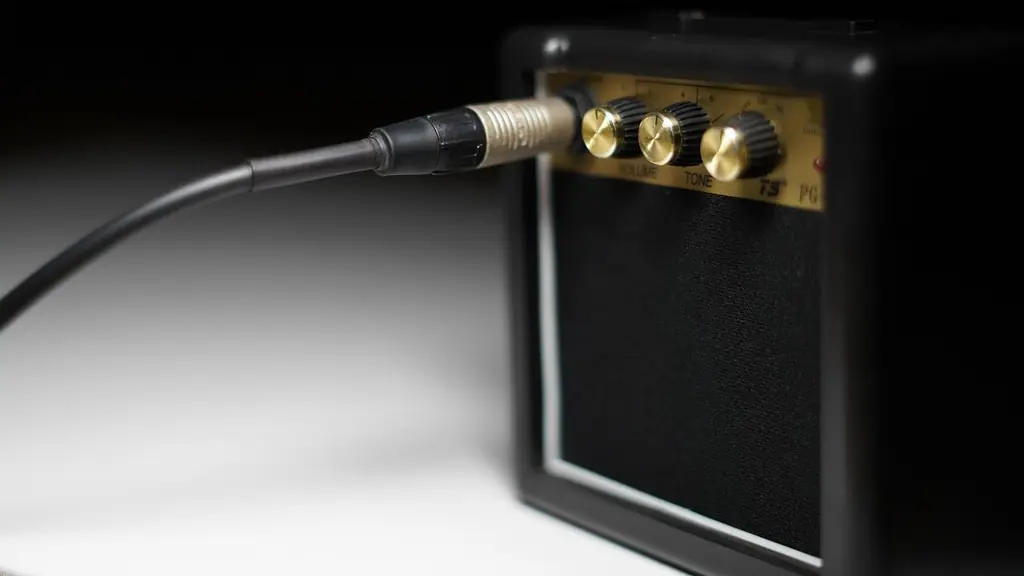
When you try guitars, play the same short phrase in every pickup position, clean and with some distortion, and notice which positions you would actually use. If you are choosing an instrument, our pillar guide on how to choose an electric guitar puts pickups alongside scale length, neck and setup. Pickups also interact with body construction (see electric guitar body styles) and, above all, with the amplifier: our guide to choosing a guitar amp explains that half of the sound. If you play with distortion, fuzz, overdrive and distortion explained is a natural next read.
Sources
- Electric Guitar Pickups, HyperPhysics, Georgia State University
- Physics of Guitar Pickups, Daniel A. Russell, Graduate Program in Acoustics, Penn State
- Guitar Wiring Explored: Humbucker Internals, Seymour Duncan
- What is the difference between active and passive pickups?, Seymour Duncan
- Step Up to a Better Electric Guitar, Yamaha Music
- How to Play the Electric Guitar: Pickups for different purposes, Yamaha Corporation, Musical Instrument Guide