Electric guitars can look interchangeable: a body, a neck, a few pickups and some knobs. Yet two guitars that look almost the same can feel completely different in your hands, and two that look nothing alike can sound surprisingly similar through the same amp. Specification sheets are full of terms, and it is hard to know which ones matter.
This guide explains the features that make the biggest practical difference, in roughly the order you will feel them: scale length, the shape and width of the neck, the bridge, the pickups, the weight and body style, and finally the setup, which can matter more than any of them. It does not recommend brands or models. It aims to help you walk into a store, or open a listing for a used guitar, and know what to look for and what to ask.
Start with what you play and how you play
Before any specification, answer three questions:
- What music do you want to play? Yamaha's instrument guide recommends a solid-body guitar as a first electric for most people, because solid bodies are versatile, widely available and suit rock and pop; it notes that hollow and semi-hollow guitars are often chosen for jazz and blues.
- Where will you play? At home through headphones or a small amp, in a band at volume, or recording. Volume affects whether feedback, and therefore body style, matters.
- What feels comfortable? Hand size, how you sit or stand, and any wrist or shoulder sensitivities matter more than any review.
If you are still deciding between electric and acoustic, read acoustic or electric for beginners first.
Scale length: the measurement you feel most
Scale length is the vibrating length of the strings, from the nut to the saddle. StewMac explains that it is measured from the nut to the center of the 12th fret, then doubled, because the 12th fret is the halfway point. It decides how far apart the frets are and how tight the strings feel at a given pitch.
Seymour Duncan's guide to scale lengths sets out the key relationship: at the same pitch and string gauge, a longer scale means more string tension. More tension gives a firmer feel and a little more snap; less tension makes bends easier but can feel looser.
| Scale length | Metric (approx.) | Commonly associated with | Typical feel |
|---|---|---|---|
| 24 in | 610 mm | Many short-scale models | Low tension, close frets |
| 24.75 in | 629 mm | Gibson's traditional scale | Slightly slinkier, easy bends |
| 25 in | 635 mm | A common in-between choice | Between the two |
| 25.5 in | 648 mm | Fender's traditional scale | Firmer, crisper |
Seymour Duncan notes that Leo Fender settled on 25.5 inches and that many builders followed, while StewMac points out that the Gibson "24-3/4 inch" scale rarely measures exactly that and has varied over the years. StewMac also describes the general tonal tendency: longer scales sound brighter and punchier, shorter scales a little warmer. These differences are real but modest compared with the pickups and amp.
Practical advice: if you have small hands or mainly play chords near the nut, a shorter scale may feel friendlier. If you like a firm string feel, plan to tune lower than standard, or play with a heavy attack, a longer scale may suit you. Your string gauge matters too; our guide to understanding guitar strings explains how gauge and scale interact.
The neck: profile, width, radius and frets
The neck is where your fretting hand lives, so it deserves the most time when you try a guitar.
Profile
The profile is the shape of the back of the neck in cross-section. Makers describe it with letters or names:
- C: an oval curve, the most common shape on modern guitars. Often comfortable for a wide range of hands.
- U: fuller and rounder, sometimes called a "baseball bat" neck. Some players with large hands, or who wrap their thumb over the top, like it.
- V: comes to a slight point along the back, either softly or more sharply. Some players find it fits the crease of the hand naturally.
Depth matters as much as shape: a "slim C" and a "chunky C" feel very different. Many makers publish neck depth in their specifications, but there is no substitute for holding the guitar.
Nut width
Nut width is how wide the neck is at the nut. A few millimeters of difference changes how much room your fingers have in open chords and how far your thumb reaches around. Narrower necks can feel fast for single notes; wider ones give fingers more room for chords.
Fingerboard radius
Look along the neck from the body and you will see that the fingerboard curves slightly from side to side. That curve is its radius. Yamaha explains that the higher the radius number, the flatter the fingerboard: lower-radius (more curved) boards are generally comfortable for open chords, while flatter boards keep the feel and action consistent all over the neck. Many lead players also find a flatter board easier for big bends high up the neck.
Frets
Frets come in different heights and widths. Taller frets need less pressure and make bends easier, but can pull chords sharp if you press hard. Count the frets too: 21 or 22 is common, 24 gives a full two octaves on each string, which matters mainly for lead players who play high up the neck.
Bridges: fixed or tremolo
The bridge anchors the strings at the body end. There are two broad families:
| Type | What it does | Advantages | Trade-offs |
|---|---|---|---|
| Fixed bridge (hardtail, stop tailpiece, string-through) | Holds the strings firmly | Very stable tuning; simple string changes; easy to retune to other tunings | No vibrato arm |
| Tremolo (vibrato) bridge | Pivots so an arm can lower or raise pitch | Expressive pitch bends and shimmer | More to set up; can affect tuning stability, especially if poorly adjusted |
| Floating or locking tremolo | Balanced by springs, often with a locking nut | Wide pitch range, very stable once set | String changes and alternate tunings take more time and skill |
The arm on a tremolo bridge is properly a vibrato effect (it changes pitch), although "tremolo" is the name everyone uses. Yamaha's guide makes a practical point: adding a tremolo to a guitar that was built without one requires major modifications, so if you think you might want one later, it makes sense to choose a guitar that already has it.
For a first electric, a fixed bridge or a simple non-floating tremolo is the easiest to live with.
Pickups
Pickups turn string vibration into an electrical signal and shape the guitar's voice more than any other part. Yamaha's step-up guide summarizes the main types:
- Single-coil: a thinner, brighter tone, with more susceptibility to hum.
- Humbucker: two coils, a thicker, rounder and louder tone, and much less hum.
- P-90-style: a single coil with a beefier, louder sound than a traditional single-coil.
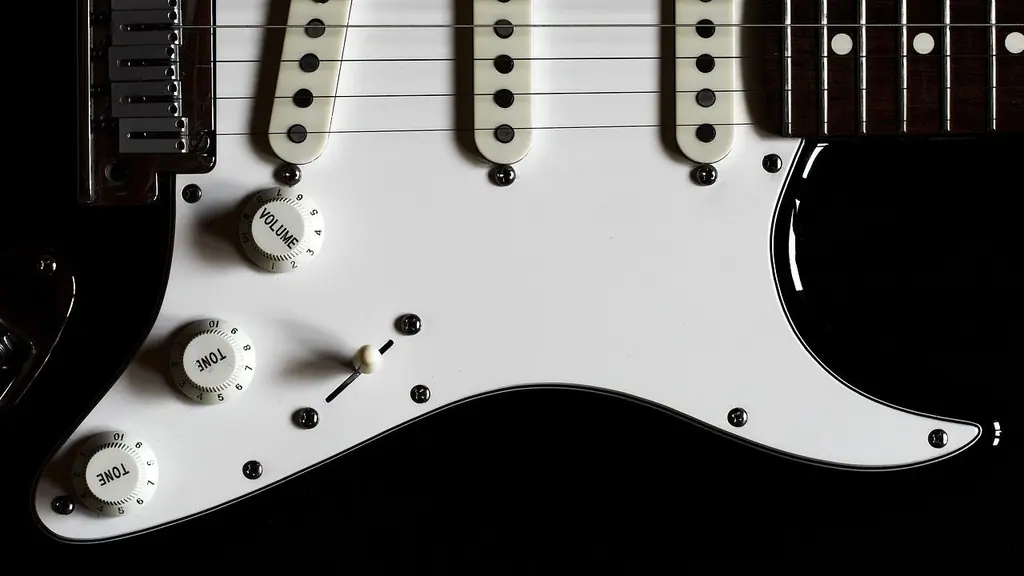
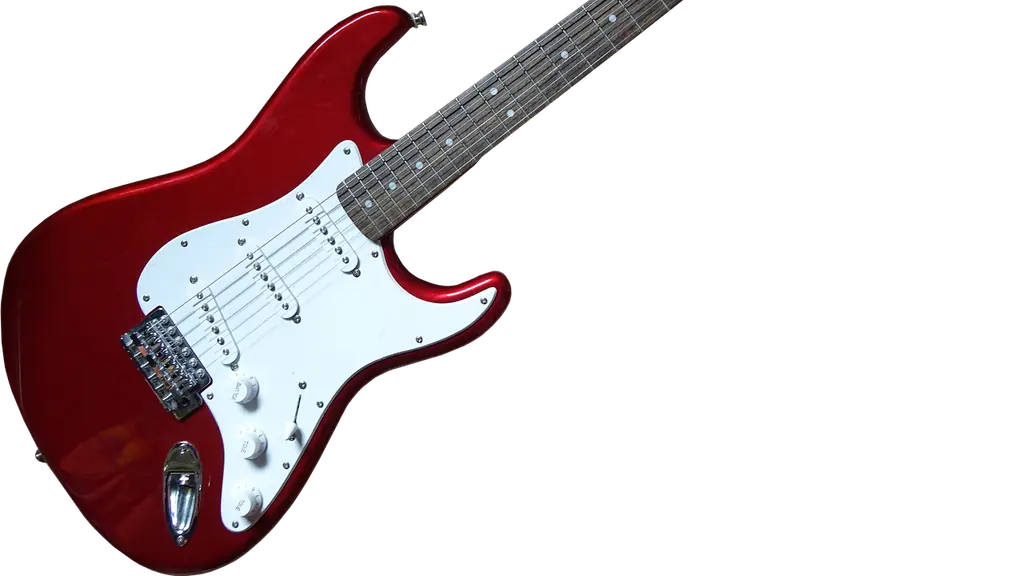
Position matters too. Yamaha's instrument guide explains that the pickup nearest the neck gives a rounder sound and the one nearest the bridge a brighter, more trebly one, and that guitars with three pickups often allow combinations, giving five switch positions. Common layouts are described by letters, such as HH (two humbuckers), SSS (three single-coils) and HSS or SSH (a bridge humbucker and two single-coils; makers differ on which end of the guitar they list first). Some guitars add a coil-split switch so that a humbucker can act as a single-coil.
Our article on electric guitar pickups explains how they work, why single-coils hum and how switching works.
Weight, balance and body style
Weight varies a lot, even between guitars of the same model, because wood density varies. If you will play standing for long periods, weight matters; so does balance. A guitar that dives headstock-down when you let go of the neck forces your fretting hand to hold it up.
Body style changes both weight and sound. Yamaha's step-up guide explains that solid bodies tend to give more sustain, hollow and semi-hollow bodies a rounder tone with less sustain and more tendency to feed back at high volume, and that some makers chamber solid bodies to reduce weight. Our guide to electric guitar body styles goes into solid, semi-hollow and hollow construction in detail.
The setup: why two identical guitars feel different
A setup is the set of adjustments that determine how a guitar plays: the action (string height above the frets), neck relief (a slight forward bow in the neck, adjusted with the truss rod), intonation (whether fretted notes are in tune up the neck) and the height of the strings at the nut.
Yamaha educator Bob Habersat writes that the difference a setup makes, especially on a beginner guitar, is huge: high action, a wrongly set truss rod or nut problems make a guitar hard to play. Yamaha's step-up guide adds that most players want the action as low as possible without strings buzzing or "fretting out."
This means:
- An inexpensive guitar with a good setup can play better than an expensive one with a poor setup.
- When buying, ask whether the guitar has been set up, and budget for a professional setup if not.
- Action, relief and intonation can be adjusted. Problems such as a warped neck or badly worn frets are more serious.
Safety: truss-rod adjustments can damage a neck if overdone. Unless you have been shown how, leave them to a qualified guitar technician.
Buying a used electric guitar
Used guitars can be good value, but check them carefully, ideally with an experienced player beside you.
- Sight down the neck from the headstock end. It should be straight or have a very slight, even bow, with no twist.
- Play every fret on every string. Listen for buzzing or notes that die early, which can point to uneven or worn frets.
- Check the frets for grooves under the strings in the first few positions.
- Plug it in. Try every pickup position and turn every knob. Crackles or cut-outs often mean dirty controls or a loose output jack, usually inexpensive to fix, but factor them in.
- Check tuning stability. Tune up, play for a while (and use the arm, if there is one), then check the tuning again.
- Look for cracks, especially where the neck meets the headstock, and at the neck joint.
- Ask about modifications such as replaced pickups or refinishing.
Yamaha's step-up guide notes that worn or uneven frets make low action harder to achieve, which is one reason some buyers prefer a new instrument. A used guitar with healthy frets and a straight neck, though, can be a sensible choice.
A checklist for trying guitars
Try this: take the same short routine to every guitar you try: a few open chords, a barre chord at the 5th fret, a single-note line up to the 12th fret, one bend, and each pickup position clean and with some distortion. Spend at least five minutes standing with a strap. Write one line about each guitar before moving on.
| Check | What to notice |
|---|---|
| Neck in the hand | Does your thumb rest naturally? Any strain in open chords? |
| Fret reach | Comfortable stretches at the first position? |
| Action | Do notes need much pressure? Any buzz? |
| Pickups | Do the positions sound distinct and useful for your music? |
| Weight and balance | Comfortable standing? Does the neck dive? |
| Tuning | Does it stay in tune after bends and pick attack? |
What comes next
An electric guitar is half of an instrument; the other half is the amplifier. Our guide on how to choose a guitar amp explains sizes, types and features, and our guitar maintenance guide covers keeping your guitar playing well. For everything else about electrics, browse the electric guitar section.
Sources
- Guitar Scale Length Explained, StewMac
- Electric Guitar Scale Lengths Explained, Seymour Duncan
- Step Up to a Better Electric Guitar, Yamaha Music
- Choosing an Electric Guitar: Choosing your first electric guitar, Yamaha Corporation, Musical Instrument Guide
- How to Play the Electric Guitar: Pickups for different purposes, Yamaha Corporation, Musical Instrument Guide
- Tone and Sound on Your Guitar, Part 1, Yamaha Music