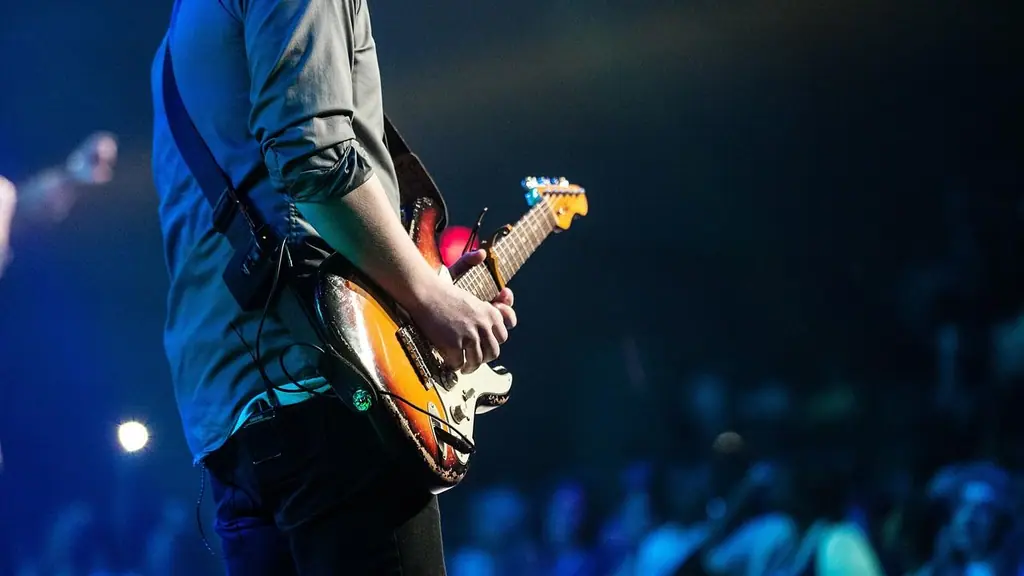
There is a moment every guitarist remembers: the first time you play for people who are actually listening. It might be an open mic, a school concert, a recital at your teacher's studio, or three songs at a family party. Your hands, which were perfectly steady at home, suddenly feel like someone else's.
That reaction is normal, and it is manageable. Performing is a skill of its own, separate from playing the guitar, and like any skill it improves with preparation and practice. This guide walks you through choosing your first performance and your songs, rehearsing in a way that prepares you for pressure, recovering from mistakes, getting through a sound check, and handling nerves before and during the show. It ends with a timeline you can follow.
Choose a friendly first stage
Your first performance does not have to be a big one. In fact, it is better if it isn't.
- Friends or family at home. The lowest-pressure option, and real practice for everything below.
- A teacher's student recital. A supportive audience that knows what learning involves.
- An open mic night. Usually two or three songs, a forgiving crowd of other performers, and often a house sound system.
- A school, library or community event. Short slots, mixed audiences, usually a relaxed atmosphere.
Boston University's College of Fine Arts profiled a piano teacher who helps students with stage fright by letting them choose how much pressure to take on: first playing only for him, then adding another student or two, then growing the audience little by little. That gradual approach suits guitarists well. Each step should feel a little uncomfortable, but not overwhelming.
Choose your songs
For a first performance, two or three songs is plenty. Choose them for reliability rather than ambition.
- Pick songs you can play at 90 percent. If a song only works on a good day, nerves will find its weak spot. Choose music you could play while slightly distracted.
- Open with your most secure song. Early success calms the body. Save the more ambitious song for second or third.
- Check the length. Time each song at performance tempo. Open mics often have strict slot lengths.
- Plan the gaps. Decide in advance whether you will retune between songs, whether you need a capo, and what you will say, if anything.
- Simplify where you need to. A clean simpler strum is far more enjoyable to listen to than a complex pattern that falls apart. Our guide to strumming patterns has steady options that work for many songs.
Write a short set list in large letters with each song's key, capo position and first chord, and tape it where you can see it.
Rehearse for the situation, not just the song
Practicing a song in pieces is how you learn it. Practicing it as a performance is how you prepare to play it in public. In the last two weeks, add these:
- Full run-throughs without stopping. Play the whole set in order, as if it counts, at least once a day. Whatever happens, keep going.
- Play in your performance position. If you will stand with a strap, rehearse standing with the same strap height. If you will sit on a stool, rehearse on a stool.
- Start cold. Pick up the guitar, tune, and play your opening song with only a minute of warm-up, the way it often happens at a gig.
- Add an audience. Play for one person, then a few. Even a phone recording you plan to share changes how it feels.
- Record and listen back. You will hear tempo drift and rushed endings you cannot notice while playing.
There is some research support for repeated exposure. An editorial in Frontiers in Psychology summarizing recent performance-anxiety research describes a study in which 18 string players performed the same piece three times in front of different small audiences on one day; their heart rate, state anxiety and expert-rated errors decreased from the first performance to the third. It is a small study, but it fits what many teachers observe: performing gets easier with performing.
Try this: for the ten days before your performance, end each practice session with one uninterrupted run of your full set, recorded on your phone. Do not restart for any reason. Note on a practice sheet one thing that went well and one to improve.
How to recover from mistakes
Everyone makes mistakes on stage. The audience mostly notices how you handle them, and a mistake you play through is often forgotten within seconds.
- Protect the rhythm. If a chord goes wrong, keep strumming in time, even on muted strings, and land the next chord on its beat. The pulse matters more than any single chord.
- Skip ahead, do not go back. If you lose your place, jump to the next chord change or the next section you know well.
- Have a safe place. Know one spot in each song (the start of a chorus, for example) that you can always jump to if you get lost.
- Keep your face neutral. Grimacing or apologizing draws attention to something most listeners did not notice.
- Rehearse recovering. In practice, deliberately stop for one beat in the middle of a song and rejoin at the next bar. It makes recovery a skill rather than a panic.
The Boston University article makes a useful point about perspective: there is always a chance of a mistake, but asking yourself whether your life would fall apart if it happened usually gives the answer no. As the teacher in the article puts it, "People are here to listen to you play—not for your failure."
Gear, tuning and the sound check
Equipment problems are among the easiest things to prevent.
Before the day:
- Fit fresh strings about a week before so they have time to settle; see our guide to changing guitar strings.
- Check your cable, strap and strap buttons. Replace anything that crackles or slips.
- Pack spare strings, several picks, a tuner, a spare cable and a capo if you use one.
At the venue:
- Arrive early and find out who is running the sound and when your turn is.
- Tune after the guitar has been in the room for a few minutes, since temperature changes affect tuning. Our guide on how to tune a guitar covers quick methods.
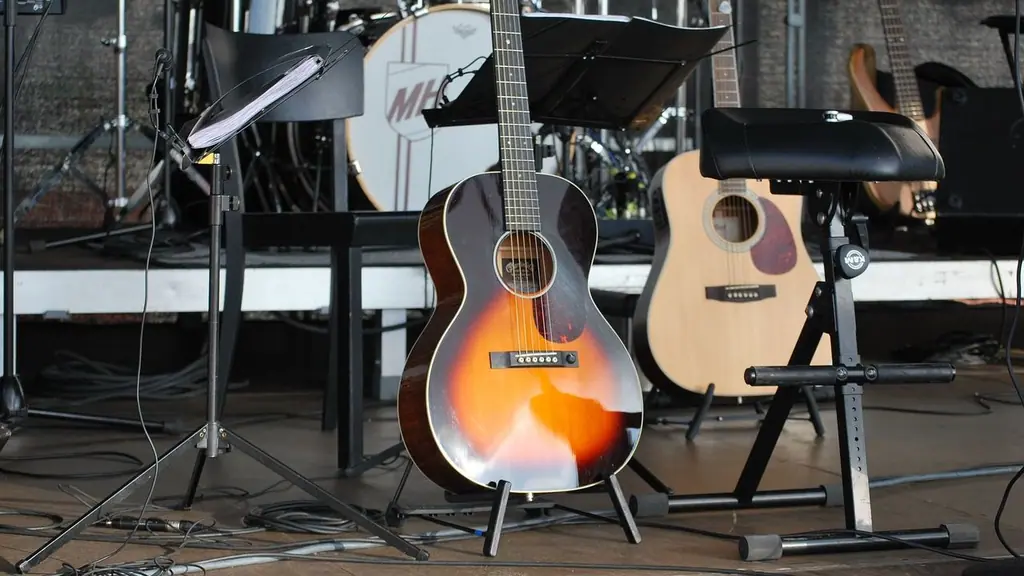
- Sound check. If there is a sound engineer, play the loudest and quietest parts of your set so they can set levels. Ask whether you can hear yourself in the monitor speaker; if not, say so politely.
- Mind the volume. Turning up to hear yourself starts a volume war. The World Health Organization notes that safe listening time falls sharply as sound levels rise, so keep stage levels moderate for your ears and everyone else's.
- Tune again just before you start, quietly, with a clip-on or pedal tuner.
Managing stage nerves
The British Association for Performing Arts Medicine describes performance anxiety as a feeling of fear with increased bodily arousal, experienced by most performers at some point, and stresses that it is not a sign of age, status or experience. It also points out that a moderate level of arousal is actually needed to perform well: too little and you may feel flat, too much and performance suffers. The goal is not to feel nothing, but to bring the feeling into a useful range.
Strategies drawn from BAPAM's guidance and the Boston University article include:
- Consistent preparation. Treat every performance, large or small, with the same attitude and preparation, rather than labeling some as "important".
- Breathing. Slow, steady breathing, such as the "box breathing" exercise BAPAM promotes, can help in the minutes before you play.
- A physical warm-up. Gentle movement helps if you feel lethargic; a short playing warm-up like our 10-minute routine gets your hands ready.
- Noticing tension. Check your shoulders, jaw and grip. Recognizing tension is the first step to releasing it.
- Visualization. Picture yourself walking on, playing well and finishing.
- Questioning negative thoughts. Write down an anxious thought and ask whether it is really true.
- Looking after yourself. Sleep, food and regular breaks help more than last-minute cramming.
- Avoiding self-medication. BAPAM advises against using alcohol or other substances to cope.
Health note: if performance anxiety is severe, long-standing or linked to panic attacks, BAPAM suggests talking things through with a suitable professional, and advises that any medication be discussed with a doctor rather than self-prescribed. If you are in the UK, BAPAM offers guidance for performers; elsewhere, a doctor or a performing-arts health clinic is a good starting point.
A performance timeline
| When | What to do |
|---|---|
| 3–4 weeks before | Choose the event and your two or three songs. Check slot length and format. |
| 2 weeks before | Daily full run-throughs. Rehearse in your performance position. Start recording. |
| 1 week before | New strings. Play for at least one other person. Finalize the set list and what you will say. |
| Day before | One relaxed run-through. Pack gear and spares. Sleep. |
| At the venue | Arrive early, tune, sound check, breathe, tune again. |
| Afterward | Write down three things that went well and one to work on. Book the next one. |
The second performance is almost always easier than the first. If you are preparing for something with judges, such as a contest or an audition, our guide to preparing for a guitar competition or audition covers requirements, repertoire and video submissions. To build performance runs into everyday practice, see how to build a guitar practice routine, and find more in our practice section.
Sources
- Managing Performance Anxiety, British Association for Performing Arts Medicine (BAPAM)
- Banish the Butterflies: How to Manage Performance Anxiety, CFA Magazine, Boston University College of Fine Arts
- Editorial: Highlights in performance science: music performance anxiety, Frontiers in Psychology (via PubMed Central)
- Deafness and hearing loss: Safe listening, World Health Organization