An audition, a talent contest or a guitar competition compresses months of practice into a few minutes. You play once, someone listens closely, and there is usually no second chance. That pressure is exactly why preparation matters so much: the players who do well are rarely the ones who practiced hardest in the final week, but the ones who prepared for the situation as well as for the music.
This guide is for anyone facing that kind of moment, whether it is a school or college audition, a band tryout, a local contest, a festival showcase or a video entry for an online competition. It covers how to read the requirements, choose what to play, build a preparation timeline, rehearse under pressure, check your gear, record a strong video submission and look after yourself on the day.
Read the requirements before you choose anything
Every audition and competition has its own rules, and missing one can sink an otherwise excellent performance. Before you choose a single piece, find the official requirements and note:
- What must be played. Set pieces, a free choice, scales, sight-reading, improvisation or an original composition.
- Time limits. Is there a maximum length? A minimum? Is the clock strict?
- Format. Live, video or both. Solo or with accompaniment. Amplified or acoustic.
- Recording rules for video entries: one continuous take, no edits, framing, file types and upload method.
- Equipment. Is an amp provided? Can you use your own pedals? Is there a chair without arms for classical guitar?
- Copyright and originality rules, especially for online contests that publish entries.
- Deadlines, including registration, upload and any pre-screening round.
Write the requirements on one page and keep it in your guitar case. Re-read it a week before the event. College music departments are explicit that submissions must include every required element; Case Western Reserve University's guidance, for example, notes that optional extras cannot replace required material.
Choosing your repertoire
When you have a choice, pick music that shows what you do well, not the hardest thing you can almost play. Case Western's audition advice puts it simply: choose repertoire that highlights your strengths and perform pieces you have fully mastered.
A few principles that help:
- Play it at 90 percent of your best. If a passage only works on your best days, it will not survive nerves. Choose something you can play cleanly at a slightly lower tempo than your maximum.
- Show contrast. If you have more than one slot, choose pieces that differ in tempo, feel or technique, such as a rhythmic piece and a lyrical one.
- Open strong. The first 20 seconds set the listener's impression. Start with material you can play confidently even with a racing heart.
- Respect the time limit. Time each piece with a stopwatch at performance tempo, then leave a margin. Running over can mean being stopped mid-phrase or disqualified.
- Ask your teacher. Someone who has heard you play many times can tell you which pieces suit you.
A preparation timeline
How long you need depends on the event and how new the material is. Here is a framework for about eight weeks before a significant audition; compress it if your event is sooner.
| Weeks before | Focus |
|---|---|
| 8–6 | Finalize repertoire. Learn any new material slowly and accurately. Fix fingerings now, not later. |
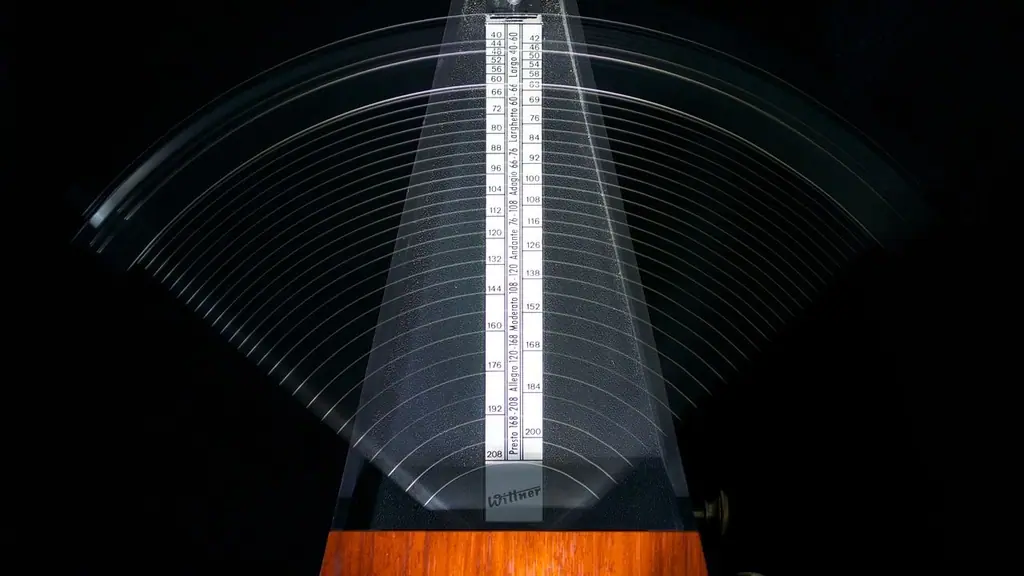
| 6–4 | Build to performance tempo with a metronome. Isolate the hardest passages and practice them daily. Start full run-throughs once a week. |
| 4–2 | Mock performances for friends, family or a teacher. Record every run-through. Practice starting "cold" without warming up for long. |
| 2–1 | Finalize gear and setup. Fresh strings early in this window. Run the full program in the clothes and seated or standing position you will use. |
| Final days | Light, confident practice. No new material, no last-minute changes. Rest your hands. |
Our guide to building a practice routine explains how to divide daily sessions between technique, repertoire and review, and the article on practicing with a metronome covers tempo ladders for difficult passages.
Rehearse the situation, not just the music
Playing well alone in your room and playing well when someone is judging you are different skills. Practice the second one deliberately.
- One-take runs. Once a day in the final weeks, play your program once, straight through, as if it counts. Do not stop for mistakes. This is the only practice that resembles the real thing.
- Mock auditions. Ask a friend or teacher to sit in front of you, introduce yourself as you will on the day, and play. Even a small audience changes how it feels.
- Recovery drills. Practice continuing after a mistake: deliberately pick a spot, stop for one beat, and rejoin at the next bar. On the day, keeping the music moving matters more than any single note.
- Cold starts. Many auditions give you little warm-up time. Practice playing your opening after only a minute of preparation.
- Record yourself. Listening back reveals rushed tempos, unclear phrasing and noise you cannot hear while playing.
Try this: for the last ten days, end each practice session with one recorded, uninterrupted run of your full program. Write down the date, the length and one thing to improve. Do not re-record. By the event, you will have ten "performances" behind you.
Gear and setup checks
Equipment problems are among the most avoidable causes of a bad audition.
- Strings. Fit new strings about a week before, not the night before, so they have time to stretch and settle. Our step-by-step guide to changing strings covers stretching them in.
- Setup. If the guitar buzzes, will not stay in tune or plays out of tune high up the neck, take it to a technician well ahead of time.
- Tuning. Bring a clip-on tuner even if you have a pedal tuner, and check tuning after the guitar has been in the room for a few minutes, since temperature changes affect it.
- Spares. Spare strings, picks, a spare cable, a battery or power supply for anything that needs it, a capo if used, and a cloth.
- Simplify electric rigs. Use as few pedals as you need. Know your amp settings (photograph them) so you can set up quickly on an unfamiliar amp.
- Seating and position. Classical players should bring a footstool or support. Practice in the position you will perform in, seated or standing, with the strap height you will use.
Recording a video audition or contest entry
More and more auditions and contests start with a video. University music departments publish clear guidance on this, and it applies well to guitar.
- Equipment you already have is usually fine. The University of Chicago's audition recording guide notes that a smartphone, tablet or computer often does the job.
- Prioritize sound. The University of New Hampshire's guidelines advise that if you have to choose between better audio and better video, choose audio. An external microphone, if you have one, will often help; a wired microphone avoids sync problems that Bluetooth can cause.
- Frame hands and face. Instrumentalists should be framed so both hands and the face are visible throughout. Place the camera at about chest height, not looking up at you, and keep music stands out of the shot.
- Light from the front. Put the main light source behind the camera, not behind you. A window behind you will turn you into a silhouette.
- Test first. Record 30 to 60 seconds, then watch and listen before doing the real take, as the University of Chicago guide suggests.
- Follow the take rules. Many programs require each piece in a single take with no edits. Check before you trim anything.
- Check sharing settings. If you upload to a video site, make sure the setting the organizers ask for (often "unlisted", not "private") lets them view it.
If you want better sound for a submission, our guide to recording guitar at home explains microphones and audio interfaces.
On the day
- Arrive early with everything packed the night before.
- Warm up gently, as in our 10-minute warm-up, but do not play your program over and over in the waiting room.
- Tune carefully once you are in the room, even if you tuned outside.
- Take a moment before you start. Set your position, breathe, hear the opening tempo in your head, then begin.
- If something goes wrong, keep going. Panels and judges hear many performances; how you recover is part of what they notice.
Nerves are normal
Nervousness before an audition is not a sign that you are unprepared. The British Association for Performing Arts Medicine describes performance anxiety as something experienced by most performers at some point, and points out that a certain level of arousal is actually needed to perform well. Its suggestions include consistent preparation, physical warm-ups if you feel flat, breathing techniques before going on, visualizing a successful performance, and avoiding self-medication with alcohol or other substances. If anxiety is severe or long-standing, it recommends talking to a professional. Our article on playing in front of an audience covers stage nerves in more depth.
After the audition
Write down what went well and what you would change while it is fresh. If feedback is offered, take it. Whatever the result, you will have learned a program to a high standard and performed it under pressure, and both make the next audition easier. Explore more practice guides in our practice section.
Sources
- Managing Performance Anxiety, British Association for Performing Arts Medicine (BAPAM)
- Audition Recording Guide, Department of Music, University of Chicago
- Video Audition Guidelines, Department of Music, University of New Hampshire
- Preparing Your Audition, Department of Music, Case Western Reserve University