A few weeks into learning guitar, many people hit the same wall. Chords buzz or sound muffled, songs fall apart at every chord change, and practice feels like effort without much progress. It is easy to conclude that you lack talent. Usually, the real cause is one or two small habits that nobody pointed out.
The mistakes below are grouped by where they come from: the fretting hand, the practice routine, the instrument itself, and rhythm. Each comes with a way to recognize it and a specific fix. You do not need to tackle them all at once. Pick the one that sounds most like you and work on it for a week.
Mistakes in the fretting hand
Pressing far too hard
Beginners often squeeze the neck as hard as they can, hoping to get a clean note. It tires the hand quickly, and it can even make the guitar sound worse. Yamaha's educator guidance notes that too much pressure bends the string and makes the note go sharp, which is one reason a chord can sound slightly sour even when every finger is in the right place.
Fix: form a chord, strum it, then slowly ease off until the notes start to buzz. Add back just enough pressure to make them ring. Do this at the start of each session until the lighter touch feels normal.
Pressing in the wrong place
Where you press matters more than how hard. A finger in the middle of the space between frets needs much more force, and a finger right on top of the fret wire produces a dead, choked note.
Fix: place each fingertip just behind the fret wire, on the side nearer the headstock. Yamaha suggests that if a note will not sound, moving the finger closer to the bridge side of the fret space often fixes it.
Flat fingers muting other strings
When a finger lies flat, its underside touches the string below it and silences it. The chord sounds dull, and you may not even notice which string is missing.
Fix: arch your fingers so you play on the very tips, with the knuckles bent. Then check the chord one string at a time, from the lowest string that should sound. Yamaha recommends exactly this note-by-note check as the fastest way to find a finger that is accidentally muting another string. Short fingernails on the fretting hand make arching much easier.
Clamping thumb and bent wrist
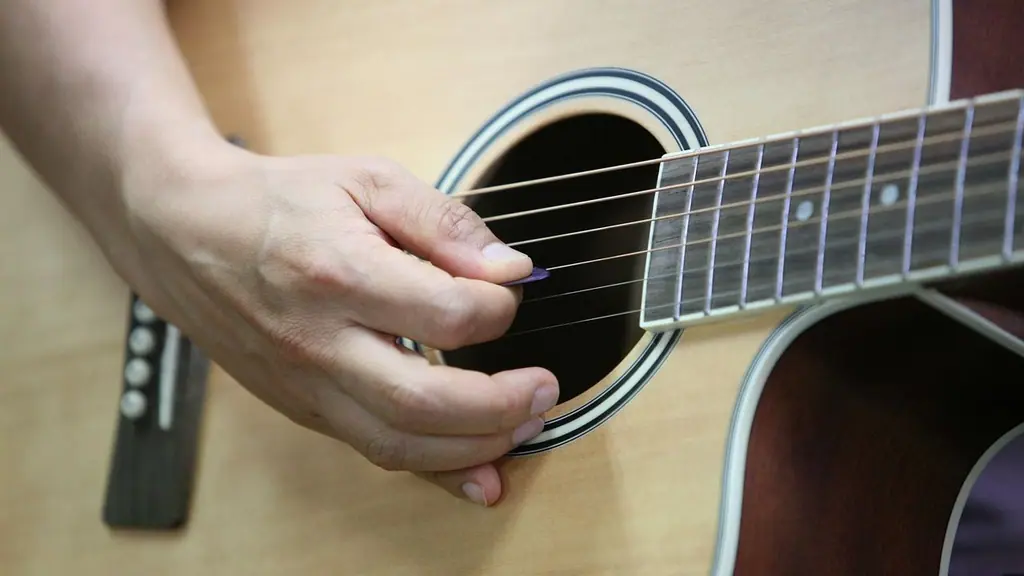
A thumb squeezing hard behind the neck, or a wrist folded at a sharp angle, makes every chord harder and is a common source of discomfort. Our guide to holding the guitar and pick without tension covers posture in detail.
Mistakes in how you practice
Practicing too fast
Playing at full speed feels like progress, but if you make mistakes on every pass, you are rehearsing the mistakes. The Center for Music Learning at the University of Texas at Austin advises spending most of your practice on material that is mostly playable for you, and changing as little as possible to make a hard passage manageable. Taylor Guitars gives similar advice for picking: start at half speed and build up gradually.
Fix: find the tempo at which you can play the passage correctly three times in a row, and practice there. Raise the metronome by a few beats per minute only when it feels easy.
Practicing chords but not the changes
Many beginners can play every chord in a song on its own, then stall at each change. That is because the change itself, moving from one shape to the next, is a separate skill.
Fix: practice pairs of chords back and forth, slowly, moving all your fingers together. Our lesson on changing chords smoothly has targeted drills.
Long, irregular sessions
A three-hour session on the weekend followed by five days off is one of the least efficient ways to learn. Hands get sore, attention fades, and much of what you learned has to be relearned next time. The University of Texas researchers recommend dividing practice into shorter segments and stopping each session before you really want to stop. The Hospital for Special Surgery also recommends regular breaks during long sessions to rest the muscles.
Fix: aim for 15 to 30 minutes on most days. If you have more time, split it into two sessions.
Only playing what you already know
Running through favorite songs is enjoyable and worth doing, but if it is all you do, progress slows to a crawl.
Fix: give each session one small, specific goal, such as "change from G to C on the beat four times in a row". At the end, write down what improved. The Texas researchers suggest naming tangible achievements like this rather than vague ones.
Mistakes with the instrument
Skipping tuning
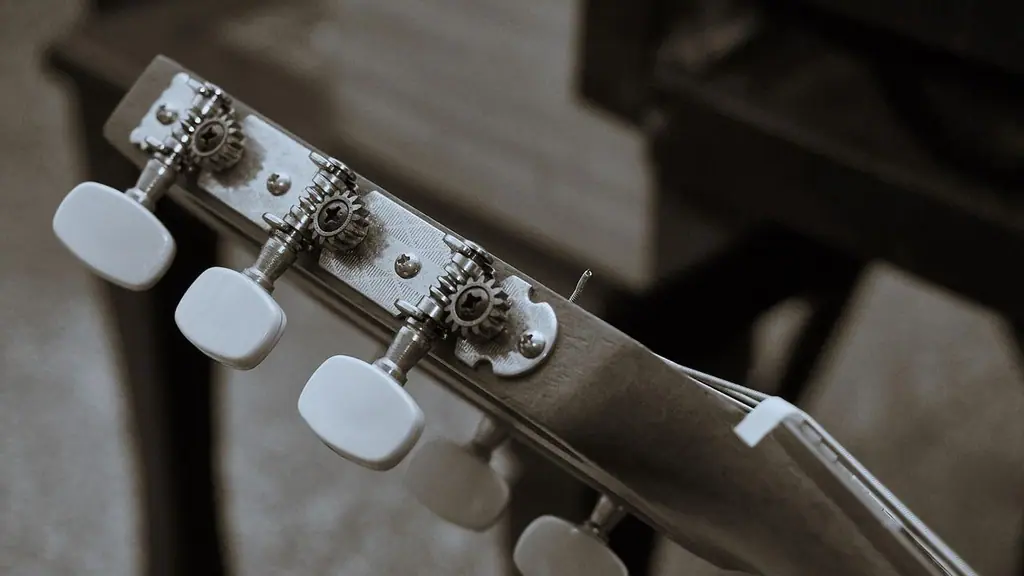
If the guitar is slightly out of tune, every chord sounds off, and you will blame your fingers. Yamaha's music-education guidance stresses that tuning should be taught early, because everything played sounds better when the instrument is in tune.
Fix: tune at the start of every session and whenever chords begin to sound sour. Our guide on how to tune a guitar shows how.
Strumming strings the chord leaves out
A cross (x) above a string on a chord diagram means "don't play this string". Strumming it anyway adds a wrong bass note that muddies the chord. This is especially common with C, which leaves out the 6th string, and D, which leaves out the 6th and 5th.
Fix: before strumming, find the lowest string that should sound and aim your pick there.
Fighting a guitar that is hard to play
High strings, old strings or a guitar that is the wrong size can make even simple chords painful. Many beginners struggle for months with an instrument that a technician could make far easier to play.
Fix: if the strings sit high above the frets, or the guitar will not stay in tune, have it set up. Yamaha's guidance is that a guitar that will not tune should get new strings first, and then a setup if the problem continues.
Mistakes with rhythm
Stopping to fix every chord
When a chord goes wrong mid-song, the instinct is to stop, fix it, and carry on. But songs do not wait, and the habit of stopping becomes ingrained.
Fix: keep your strumming hand moving even if the chord is not ready. Strum the open strings, or a partial chord, and catch up on the next beat. Playing in time with a slightly messy chord sounds much better than perfect chords with gaps.
A strumming hand that starts and stops
If your strumming arm freezes whenever you are not hitting the strings, your rhythm will be uneven.
Fix: keep the arm moving down and up like a pendulum, counting "1 & 2 & 3 & 4 &". Downstrokes fall on the numbers, upstrokes on the "&". When a pattern skips a strum, the arm still moves; it simply misses the strings. Our lesson on strumming patterns for beginners builds on this.
Try this: set the metronome to 60 BPM. Choose two chords and play each for four beats, strumming down on every click. Your only goal is not to stop for one full minute, even if some chords are imperfect. When that works, try it with down-up strums.
A quick diagnosis table
| What you hear or feel | Most likely cause | First thing to try |
|---|---|---|
| Buzzing note | Finger too far from fret, or too little pressure | Move closer to the fret wire |
| Dead or choked note | Finger on top of the fret | Move slightly back from the wire |
| One string missing | Flat finger muting it | Arch the finger; check string by string |
| Chord sounds sour | Out of tune, or pressing too hard | Tune; lighten pressure |
| Muddy bass | Strumming a string marked x | Start the strum on the right string |
| Gaps at chord changes | Practicing chords, not changes | Two-chord drills with a metronome |
| Aching hand or wrist | Clamping, poor posture, long sessions | Relax the thumb; shorter sessions |
Safety: tender fingertips are normal while calluses form. Pain in the hand, wrist, arm or back is different: stop and rest. If it continues for more than a few days, see a healthcare professional, and ask a teacher to check your posture.
Where to go from here
Choose one mistake from this page and make it your focus for the coming week. Then return to the four-week plan in how to start learning guitar, which builds these habits into a daily routine from the start.
Sources
- Teach Guitar Chords, Yamaha Music Educator Hub
- Tuning a Guitar, Yamaha Music Educator Hub
- Tips for Efficient, Effective, Joyful Practice, Center for Music Learning, The University of Texas at Austin
- How to Hold a Guitar Pick, Taylor Guitars
- Injury Prevention Tips for Musicians, Hospital for Special Surgery